
How autonomous surveillance systems are redefining border security – and why a reliable energy supply plays a key role in this.
Europe’s external borders stretch for over 13,000 kilometres. Securing such vast distances requires a fundamental shift from traditional patrolling to technology-based surveillance. Autonomous surveillance towers, thermal imaging systems and AI-powered detection solutions now form the backbone of modern border security. However, these advanced systems share a common weakness: they require electricity. A reliable, low-maintenance and silent power supply – often in remote locations.
In this context, SIQENS’ methanol fuel cell technology offers significant advantages for powering border security technologies.

The challenge of border security: energy in the most remote locations
Modern border surveillance operates on a simple principle: keeping everything under constant surveillance. Autonomous surveillance towers, equipped with thermal imaging cameras, radar systems, motion detectors and AI-powered analysis, can monitor vast areas around the clock without the need for human presence. These systems identify suspicious activity and alert response teams in real time – provided, of course, that they remain operational.
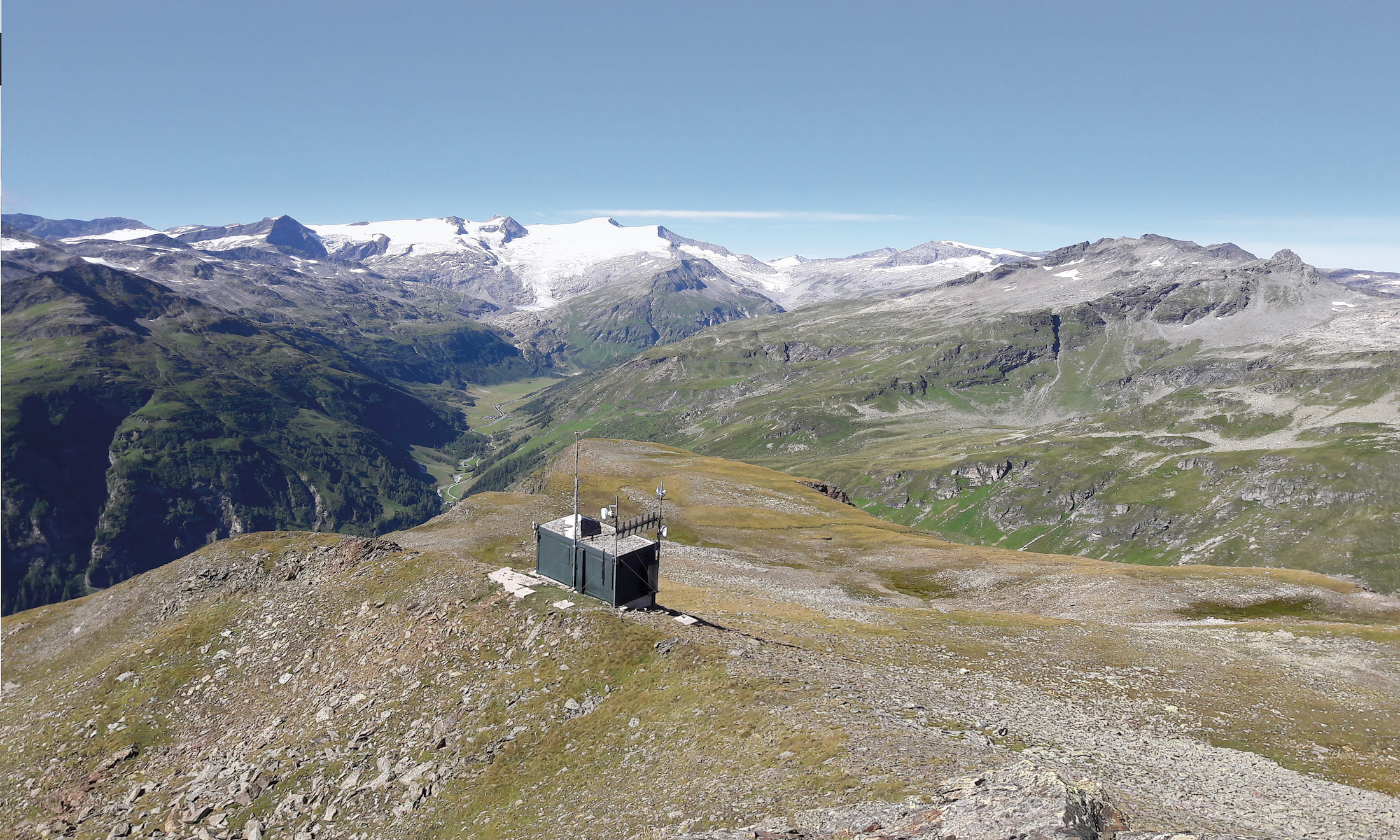
Remote facilities located far from the mains grid can be exposed to extreme weather conditions – ranging from arctic winters with temperatures of -30 °C to tropical temperatures of +45 °C. In border security applications, failures in the power supply system not only result in downtime but also create vulnerabilities.
Autonomous surveillance towers: the new paradigm in border security
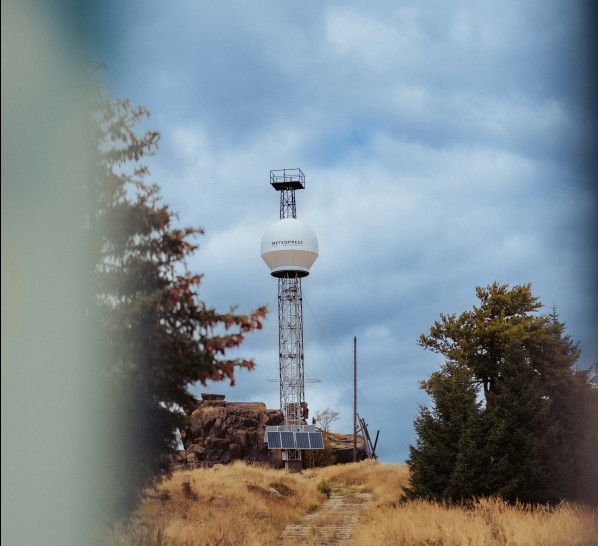
The transition from manned border posts to autonomous surveillance networks represents one of the most significant changes in the field of border security. Modern sensor towers combine several detection technologies:
- Multispectral detection: thermal imaging cameras, radar systems, optical cameras, microphones and ground sensors work together to provide a comprehensive picture of the monitored area.
- AI-powered analysis: Modern machine learning algorithms distinguish between legitimate activities and potential security threats, thereby reducing false alarms and improving the efficiency of monitoring.
- Network integration: Individual towers communicate with both command centres and neighbouring installations, thereby forming a network of overlapping coverage areas.
- Autonomous operation: These systems operate continuously for weeks on end without human intervention and under harsh environmental conditions, whilst maintaining their full operational capability.
The effectiveness of this technology-based security measure depends entirely on an uninterrupted power supply.
Border control infrastructure: More than just a watchtower
Comprehensive border security requires a distributed network of power-driven systems across the entire security architecture:
- Communication relay stations ensure that remote sensors can always transmit warning messages to the central control centre. These relay points require a reliable power supply to maintain network integrity.
- Command posts used during operations or emergencies require a silent, independent power supply for computers, communication equipment and environmental controls.
- Border control points require emergency power supply systems that are activated immediately in the event of a power cut and ensure that control devices, biometric scanners and communication systems remain operational without interruption.
All these applications share certain requirements: quiet operation, minimal maintenance, tolerance to extreme temperatures, and the ability to operate autonomously for weeks between maintenance intervals.
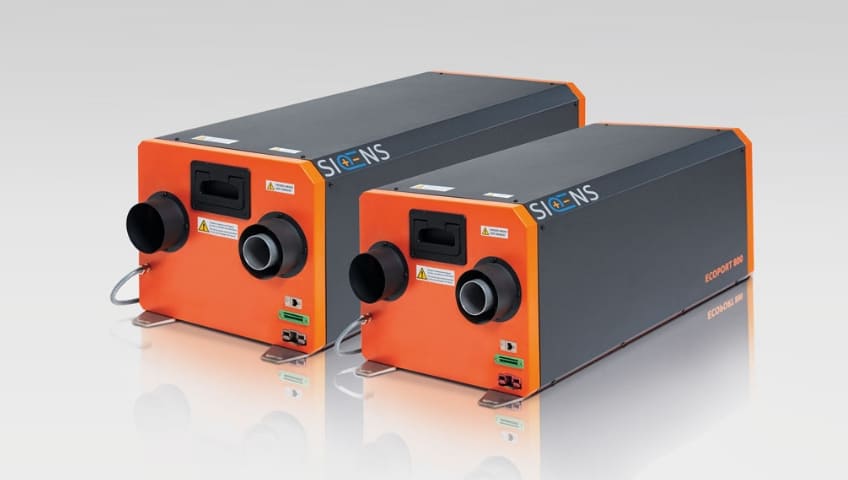
The advantage of methanol fuel cells: a use case for border security
The SIQENS Ecoport 800 and Ecoport 1500 methanol fuel cells address these challenges in the field of border security with features specifically designed for long-term monitoring operations:
- <Quiet operation (< 45 dB): The Ecoport runs almost silently.
- Extreme temperature resistance: Proven operation and self-starting at temperatures ranging from -20 °C to +50 °C.
- Extended autonomous operation: 25 litres of methanol provide enough energy to continuously power a typical sensor tower for several weeks.
- Low-maintenance operation: Minimal maintenance required – as a rule, the fuel canister simply needs to be replaced every 2 to 4 weeks, depending on usage.
- Hybrid integration capability: The Ecoport works seamlessly with solar panels and battery storage systems and is automatically activated when solar power generation drops or the batteries are empty.
- Remote monitoring and diagnostics: Thanks to round-the-clock digital telemetry, operators can monitor fuel levels, system status and power output from central control centres.
Practical implications for border security: A comparison of power supply systems
| Criteria | Diesel generator | Solar + battery | Methanol-FC + hybrid |
|---|---|---|---|
| Fuel source / Service interval | Every 3–4 days | Regular battery change | 3–4 weeks |
| Noise level | Over 85 dB | Low | Below 45 dB |
| Winter reliability | High | Low, large battery banks required | High |
| Maintenance costs | Medium (due to wear and tear) | Low | Low |
| Operating costs | Medium to high | High (battery swap) | Low |
The fuel cell solution offers outstanding reliability whilst reducing operating costs, and maintains its full performance even in winter.
Strategic implications: From reactive to end-to-end security
The ability to deploy truly autonomous surveillance systems with long operational lifespans is shifting border security strategy from reactive patrols to continuous surveillance. If sensor networks can operate reliably for weeks without human intervention, security forces can shift their focus from conducting patrols to analysing data and responding to confirmed threats.
The benefits of the Ecoport fuel cell for border security at a glance:
- Expanded coverage: A reliable energy supply makes it possible to operate in locations that were previously inaccessible – mountain passes, dense forests and island access points.
- Resource optimisation: A well-positioned autonomous tower with a reliable power supply replaces several daily patrol runs.
- Intelligence advantage: Normal activity patterns, such as those of wild animals, and weather conditions are recorded. The detection of anomalies, the reduction of false alarms and the response to genuine threats are perfected.
- Weather-proof: Systems that remain operational even in stormy weather ensure safety.
Outlook: Developments in border control technology
As security technology continues to advance, the power requirements of border control systems will continue to rise. Next-generation sensors will consume more power whilst requiring even greater reliability and availability.
Methanol fuel cell technology can be easily scaled to meet these growing demands. The modular design allows multiple Ecoport units to be connected in parallel to deliver higher power output, whilst the same core technology that powers a remote sensor tower can also support mobile command posts, temporary checkpoints or emergency stations.
These developments make the reliability of power supply systems more important than ever. Quiet, long-lasting and low-maintenance fuel cells not only supply power to border security installations, but also enable the autonomous surveillance networks that are central to modern border security.
Methanol fuel cell technology is more than just an energy solution – it is the key technology that makes sustainable, state-of-the-art and truly autonomous border protection a practical reality.
Find out more about SIQENS Ecoport fuel cells and their role in border security: www.siqens.de
The RES Project Poland is supported by the German Federal Ministry for Economic Affairs and Energy as part of the Renewable Energy Solutions Programme of the German Energy Solutions Initiative







 Co-funded by the Horizon 2020
  Solar Impulse