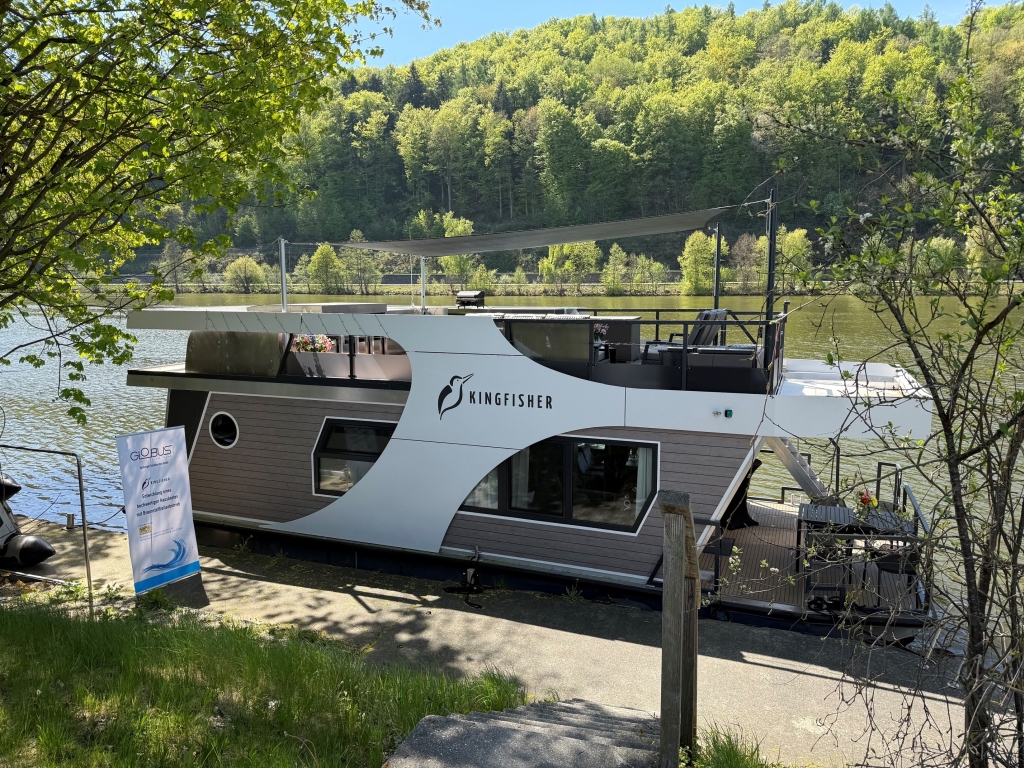
Houseboats and river cruise vessels have specific requirements when it comes to their energy supply. The electricity requirements on board a modern luxury houseboat include air conditioning, lighting, entertainment systems, the kitchen and other on-board systems – all far from any shore power connections. Until now, such loads have been met by diesel generators. This involves noise, exhaust fumes and regular maintenance. In the leisure sector in particular, this runs counter to what boat tourists are looking for: a peaceful and emission-free experience in a natural setting. In the leisure sector in particular, this runs counter to what boat tourists are looking for: a peaceful, emission-free experience in a natural setting.
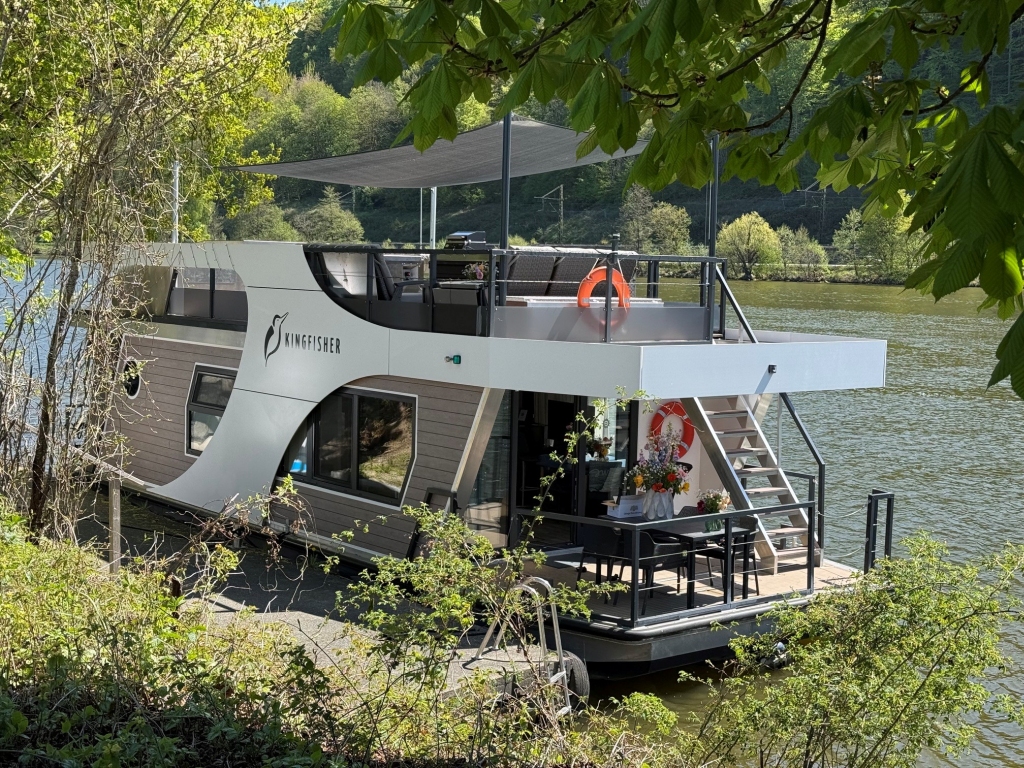
For Eichberberger Schiffservice GmbH, which operates, among other things, the luxury houseboat Kingfisher on the Danube, this marked the start of a technical reorientation towards a fully electric, battery-powered boat. The batteries need to be charged regularly without compromising the quality of the experience on board and without the need for frequent trips ashore. Greater independence on the water – that was the operators’ vision. The solution lies in two SIQENS ECOPORT 1500 fuel cells.
Fuel cells used to charge the batteries meet the vessel’s main standby power requirements. With sufficient fuel – in this case, methanol as a liquid hydrogen carrier – there is greater freedom of movement. Furthermore, there are no noise, particulate matter or CO₂ emissions. This represents a high standard of sustainability, whilst maintaining high standards of comfort and the river cruise experience.
Each ECOPORT unit is based on SIQENS’ patented HT-PEM fuel cell technology and continuously generates up to 1,100 watts of electrical power. It requires virtually no maintenance. For guests and crew, this means maximum comfort.
Installation and delivery package
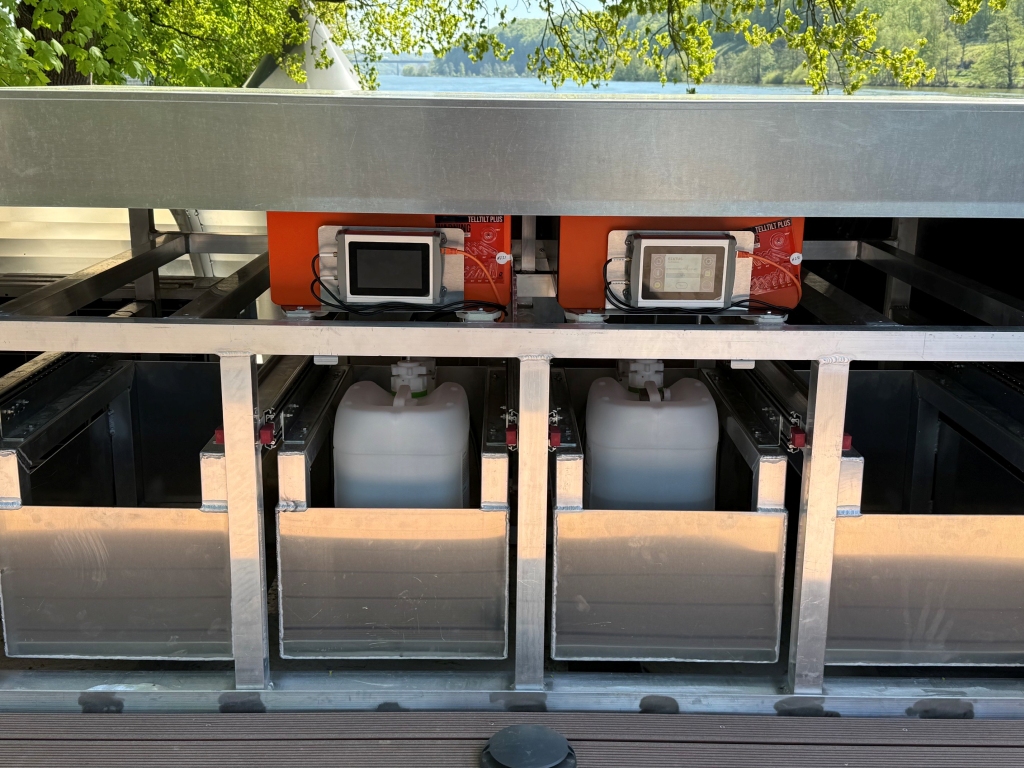
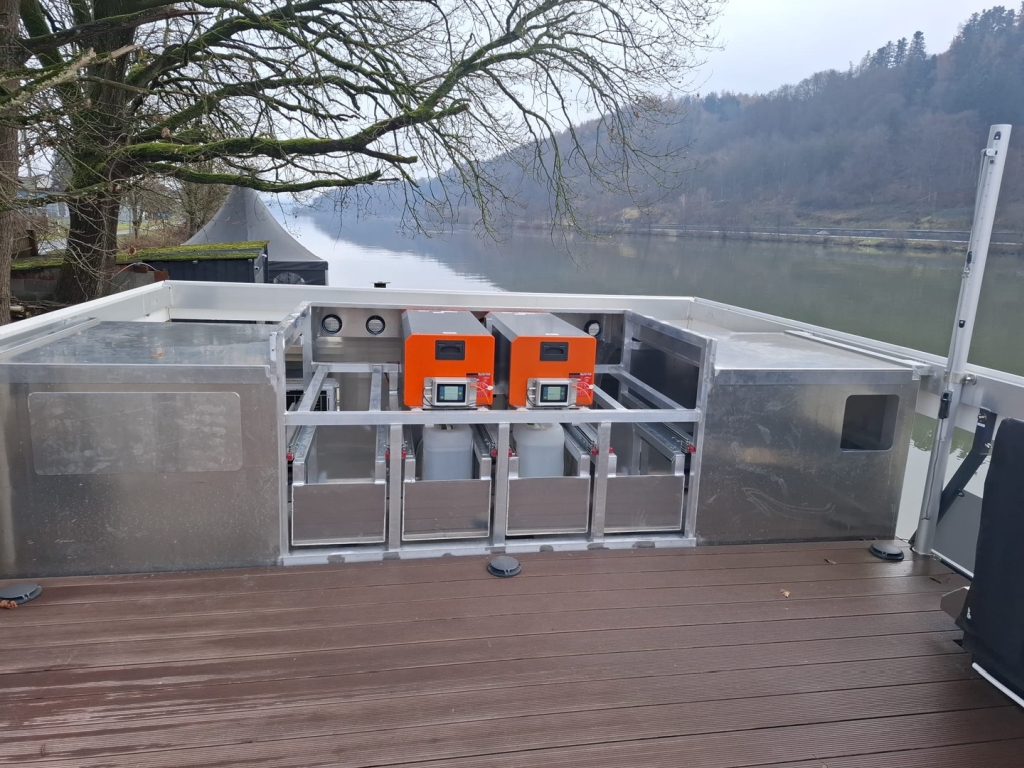
SIQENS supplied the design documentation for a mounting table capable of holding two ECOPORT 1500 units, including four collection containers, each designed to hold two 25-litre methanol cartridges , as well as four pull-out rails for the methanol containers. The shelter had already been designed to accommodate fuel cells, and SIQENS was able to install the ECOPORTS with ease. As part of the scope of supply and initial installation, SIQENS also provided cable harnesses and air inlets and outlets, four dual adaptors, a busbar, an emergency stop switch, a Victron inverter and other small parts.
Boat system controls
The technical integration of the fuel cells into the boat’s electrical control system has been kept simple. The overall system consists of 2 x SIQENS Ecoport 1500 units, a 48V battery (Torqeedo), and a charging system to recharge Torqeedo’s 330V–380V high-voltage battery (propulsion battery). The flow of energy is regulated by voltage thresholds. If the charge level of the drive battery drops, it is recharged via the charger from the 48V battery. If the voltage of the 48V battery drops, the ECOPORT units switch on and generate up to 2.2kW of power. Once power consumption ceases, the batteries are fully charged and the ECOPORT switches off again until the next charging cycle.
Conclusion
The Kingfisher project demonstrates that zero-emission power supply on the water is now technically and economically feasible. The SIQENS Ecoports 800/1500 are ideal wherever a reliable power supply is required without a mains connection. This sends a strong signal to the entire recreational boating sector: sustainability and comfort are not mutually exclusive. Quite the contrary – not only does the environmental footprint improve, but so does the quality of life on board. SIQENS and Eichberger worked together to demonstrate that the future of inland waterway transport can be environmentally-friendly, quiet and comfortable.





 Co-funded by the Horizon 2020
  Solar Impulse